ANTONAKIS, Anna

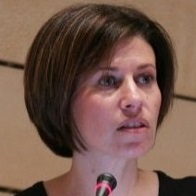
Anna Antonakis is currently a visiting professor for journalism studies and Research Associate in the project: Media and Digital Literacy in the Arab World and Europe at Freie Universität Berlin. As an interdisciplinary scholar, she explores questions around media representations and technologies, social mobilization and security/ies from an intersectional perspective. She holds a Ph.D in Political Science from FU Berlin and is a member of the International Consensus Guidelines Committee for the Prevention of Radicalization and Violent Extremism.

AUDET, Geneviève

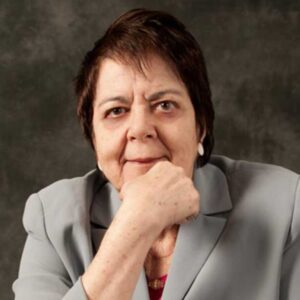
Professor at the University of Québec in Montréal (UQÀM), Geneviève Audet specifically works at the Department of Specialized Education and Training of the Faculty of Education Science. She is Regular Researcher at the SHERPA Research Institute of the CIUSSS du Centre-Ouest-de-l’Île-de-Montréal and Holder of the ‘Chaire de recherche sur les enjeux de la diversité en éducation et en formation’. Ms. Audet’s research focuses on intercultural education, prevention of violent radicalization in school settings, relations between school, immigrant families and community, and training of school staff in this area. Mrs. Audet is an associate member of the UNESCO-PREV Chair.

BEN HAFAIEDH, Abdelwahab

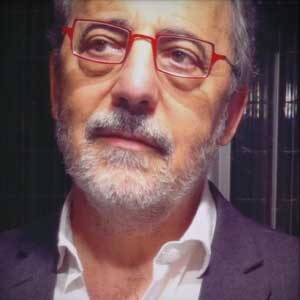
Professor of Sociology at the Faculty of Humanities of the Tunis University (FSHST), Abdelwahab Ben Hafaiedh is the president of the Applied Social Science Forum – Arab Region. He is also the secretary general of CAFA (Civil Actors in Fight against Violent Extremism) network. His most recent books are ‘The Tunisian Labor Market in an Era of Transition’ (2019) cowritten with Ragui Assaad, ‘Arab Spring : Negotiating in the Shadow of the Intifadat – Analyzing the Arab Spring Springs’ (2015) cowritten with William Zartman, ‘Critical Perspectives on International Education – Series Editors’ (2012) and ‘The Student Visa: The Object of Desire, the Mirror of the Undesirable (International Mobility of the Tunisian Students after 9/11)’ (2005). Mr. Ben Hafaiedh is an associate member of the UNESCO-PREV Chair.

BENOÎT, Maryse

Associate Professor at the Department of Psychology of the University of Sherbrooke, Maryse Benoît specializes in intercultural intervention and trauma treatment, particularly in the evaluation of different intervention modalities (cognitive-behavioural therapy, art therapy, etc.) for immigrants and refugees who have experienced violence and severe trauma. Her research also focuses on sociocultural variables that may influence the therapeutic relationship and response to treatment. Ms. Benoît is also interested in compassion tiredness, as well as emotional regulation strategies among facilitators working with immigrants and refugees. Mrs. Benoît is an associate member of the UNESCO-PREV Chair.

BIRDWELL, Jonathan

Jonathan Birdwell is Regional Director for Europe, Middle East, Africa – Policy and Perspectives for Economist Impact. He oversees the research, education and policy work of ISD, which includes the Policy Planners Network and the Strong Cities Network. Mr. Birdwell holds an M.A. (Honors) from the London School of Economics and Political Science and a B.A. in political science and philosophy from Tulane University in Louisiana. Jonathan’s current research focus is on developing unique partnerships and ISD’s online technology and analytical capabilities to provide an up-to-date understanding of extremist propaganda and recruitment tactics. He is also responsible for evaluating ISD’s online campaigns and personal online interventions. Mr. Birdwell is an associate member of the UNESCO-PREV Chair.

BOUHANA, Noémie

Dr Bouhana is Associate Professor in Security and Crime Science at UCL, where she leads the Counter-Terrorism Research Group. She investigates the processes involved in the emergence of extremist social ecologies in complex systems, the role that these ecologies play in the individual development of an extremist propensity, the mechanisms which underpin individual susceptibility to extremist moral change, and the implications of this understanding for risk analysis. At present, she is Principal Investigator of the $1M project “The Social Ecology of Radicalisation”, funded by the Minerva Research Initiative. Her previous work has been supported by the European Commission, the Centre for Research and Evidence on Security Threats, the Defence Science and Technology Laboratory, the Office of Security and Counter-Terrorism, the MoD Counter-Terrorism Science and Technology Centre, the Engineering and Physical Sciences Research Council, and the US National Institute of Justice.

BOULAD-AYOUB, Josiane

Josiane Boulad-Ayoub studied philosophy at the University of Lyon III. From 1973 to 1979, she was Director of the Philosophy Department at Cégep du Vieux Montréal. She worked at the University of Québec in Montréal (UQÀM) as Director of the Philosophy module (1980-1984), as Director of the Certificate in Social Sciences—that she helped found—(1983-1985), and as Director of the Department of Philosophy (1992-1996). Ms. Boulad-Ayoub was also Vice-Dean in Research at the Faculty of Human Sciences (2004-2007). In 2011, she was appointed Professor Emeritus. Earlier in her career, in 1999, she became the first holder of the UNESCO Chair in the Study of the Philosophical Foundations of Justice and Democratic Society in Canada, thus recognizing her international influence. Mrs. Boulad-Ayoub is an associate member of the UNESCO-PREV Chair.

BUSHER, Joel

Joel Busher is Associate Professor at the Centre or Trust, Peace and Social Relations (CTPSR), Coventry University, UK. The broad aim of his research is to document and enhance understanding of how human interactions – the rituals that shape and comprise our everyday lives; the cognitive and moral orders that we make, break and patch together again; and the emotional rhythms of our lives – give rise to or undermine harmonious social relations and human well-being. He has spent much of the past ten years carrying out research relevant to efforts to prevent violent extremism. This has included mixed methods research about the dynamics of mobilisation against religious or ethnic minorities; the escalation, non-escalation and de-escalation of group-based violence and how members of militant groups themselves contribute to manage the parameters of their violence; and research and evaluation of the enactment and impacts of PVE policies and programmes.

CHOQUET, Sabine

Associate Professor at the Montréal Institute of International Studies (IEIM-UQÀM), Sabine Choquet is Researcher in Political Anthropology, as well as Researcher and Secretary General of the Centre d’Études des Radicalisations et de leurs Traitements (CERT) of the Université Paris-Diderot. Holder of a doctorate from La Sorbonne, a doctorate in humanities from Université Laval and a ‘Habilitation’ to lead anthropological research from the University of Fribourg, Ms. Choquet focuses her work on minority rights, cultural, linguistic and religious diversity management policy, collective identity, radicalization mechanisms and violent extremism prevention policy. She mainly studies Canada, Switzerland, Malaysia and Lebanon. Mrs. Choquet is the recipient of various international research prizes, including the first prize for Political Book of the Year in 2012 (Fondation Jean-Charles-Bonenfant), and numerous excellence-based awards, including the Marie Curie Fellowship. She is the author of Unis par la diversité – Ces pays forgés par leurs différences (2018) et Identité nationale et multiculturalisme : deux notions antagonistes ? (2015). Two years ago, she founded an international consortium on the evaluation of radicalization prevention systems. To this day, she is still involved in the consortium. Mrs. Choquet is an associate member of the UNESCO-PREV Chair.

ALAVA, Séraphin

Full Professor at the EFTS Mixed Research Unit, Mr. Séraphin Alava specializes in education sciences. He is a member of the “Radicalities and regulations” team at the Maison des sciences de l’Homme of Toulouse CNRS. As an expert, he led the UNESCO World Report on the links between radicalization and social media. Mr. Alava is the head of three European research networks, building cross-disciplinary links which provide a better understanding of the processes of radicalization, radical withdrawal issues and the processes leading to violent extremism. He developed a method for evaluating the impact of counter-speech initiatives aimed at preventing radicalization, which is included in the Radicalisation Awareness Network’s best practices. Mr. Alava is an associate member of the UNESCO-PREV Chair.