LABORIER, Pascale

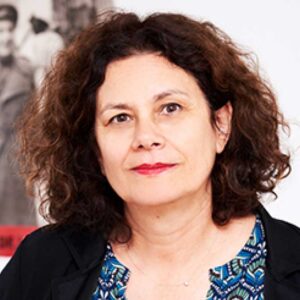
Holder of a doctorate in political science and international relations from Sciences Po, Pascale Laborier is a full professor in Political Science; co-director of the Master 2 Political Science; first vice-president of the University of Paris Lumières in Nanterre; chair of the Political Science Department at the University of Paris Ouest Nanterre, France; scientific coordinator of the Scientific Committee on Radicalization Processes (COSPRAD) within the Athena Alliance. She is a member of the International Scientific Council of the journal Violence: An International Journal, and a member of the InSPIREurope Scientific Committee of the Scholars at Risk network.  From 2005 to 2010, she was director of the Marc Bloch Center of the Mixed Units of French Research Institutes Abroad (UMIFRE) in Berlin. Ms. Laborier’s publications focus on public action and police or cameral sciences. Since 2016, she has been on a thematic research mobility on the history of forced academic migration that focused specifically on the Tupamaros and Uruguayan refugees welcomed in France. From 2015 to 2017, she was an advisor – humanities and social sciences to the State Secretariat for Research and Higher Education and was in charge of issues related to the transfer of research to public policies. Ms. Laborier is an associate member of the UNESCO-PREV Chair.

FICETTE, Toria

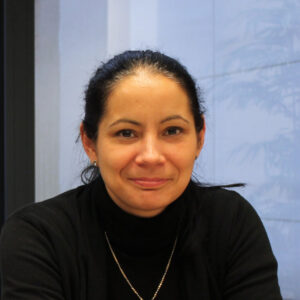
Toria Ficette is director at Brussels Prevention & Security, the Brussels regional administration in charge of developing and executing the regional master plan for prevention and security. Among other prevention and security topics, she has been coordinating the Brussels network of practitioners working on PVE/CVE issues. In this context, the regional administration supports local actors in developing their CVE/PVE policies in expertise, resources, and tools. She holds a master’s degree in international relations and peace studies and a master’s in educational sciences. Before joining BPS, she has been working for security agencies where she specialized in counter-terrorism and analysis of global terrorist networks.

FIELITZ, Maik

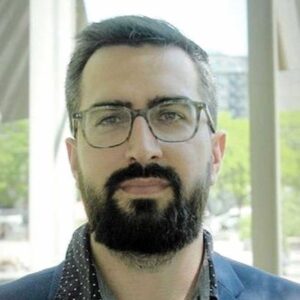
Maik Fielitz is a researcher at the Jena Institute for Democracy and Society working on right-wing extremism, protest and social movements as well as on regulation of social media platforms. He studied political science, history and peace and conflict studies in Jena, Marburg and Athens and is finishing his PhD on the rise of neo-Nazism in Greece at Goethe University Frankfurt am Main. Maik Fielitz is a Non-Resident Research Fellow at the Institute for Peace Research and Security Policy at the University of Hamburg, Doctoral Fellow at the Centre for Analysis of the Radical Right, and International Expert for Greece at the Center for the Research on Extremism at the University of Oslo (C-Rex).

COOLSAET, Rik

Rik Coolsaet is Professor Emeritus of International Relations at Ghent University (Belgium) and Senior Associate Fellow at Egmont–Royal Institute for International Relations (Brussels). From 2002 to 2009 he served as Director of the ‘Security & Global Governance’ Program at the Egmont Institute. He has held several high-ranking official positions, such as deputy chief of the Cabinet of the Belgian Minister of Defence (1988–1992) and deputy chief of the Cabinet of the Minister of Foreign Affairs (1992–1995). He has been conducting and coordinating research on terrorism and radicalisation since 2003. He was appointed a member of the original European Commission’s Expert Group on Violent Radicalisation (est. 2006) and the subsequent European Network of Experts on Radicalisation (ENER). His current research deals with the foreign fighters issue, the vicissitudes of the concept of radicalization, and right-wing extremism and terrorism.

COULIDIATI-KIELEM, Justine

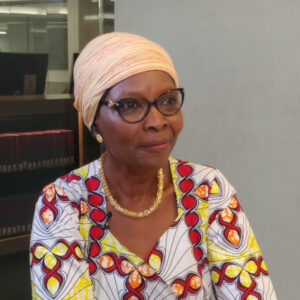
Dr. Coulidiati is the first Regional Coordinator of the G5 Sahel Women’s Platform, a member of the NGO Leaders for Peace and a founding member of African Women in Mathematics (AWM). She is a lecturer at the UFR in Economics and Management at the Thomas Sankara University in Ouagadougou, Burkina Faso. She is the founding president of the Action Group for the Promotion, Education and Training of Women and Girls (GAPEF), which fights for the rights of women and girls and to increase women’s essential contribution to peace. In the context of the bloody community crisis in Yirgou, with young people and women leaders, she successfully led the social dialogue for forgiveness and reconciliation among communities in conflict. She has carried out several works and advocacy with the United Nations and high-level international, sub-regional and G5S countries to increase women’s involvement in conflict resolution and peace building. Mrs. Coulidiati-Kielem is an associate member of the UNESCO-PREV Chair.

DJOUADI, Chafiaa

Urban Planner, Architect and Doctor in human geography, Chafiaa Djouadi is Researcher and European Projects Manager in prevention of radicalization leading to violence at the EFTS Mixed Reasearch Unit. Specifically, she works among the “Radicalities and regulations” team of the Maison des sciences de l’Homme of Toulouse CNRS. An expert in public policy and sustainable development, she has worked for governments and international organizations (UNDP, UNICEF, BADEA, AU, etc.) to promote the peaceful and violence-free development of Africa. She is Peace Ambassador for the Peace and Security Council of the African Union (UN Security Council resolution 1325) and acts as a mediator in preventive diplomacy and conflict resolution. Ms. Djouadi is an election observer for several African countries. In this role, she aims to analyze the engagement of women in political life and in the promotion of peace. Mrs. Djouadi is an associate member of the UNESCO-PREV Chair.

DUCOL, Benjamin

Assistant Director General of Strategic and Scientific Development at the Center for the Prevention of Radicalization Leading to Violence (CPRLV) in Montréal, Benjamin Ducol has a doctorate in political science from Université Laval and was a postdoctoral fellow at the International Centre for Comparative Criminology (ICCC). He is Associate Professor at both the École de criminologie of the University of Montréal and the Department of Social and Public Communication of University of Québec in Montréal (UQÀM). His research focuses on militant radicalness related to jihadism, radicalization processes in the digital age, issues related to the prevention of violent radicalization and mobilizations of victims of terrorism. He is affiliated with the Canadian Network for Research on Terrorism, Security and Society (TSAS), the International Centre for Comparative Criminology (ICCC), the ANR – Violences et radicalités militantes (ANR VIORAMIL) and the International Panel on Exiting Violence (IPEV). Mr. Ducol is an associate member of the UNESCO-PREV Chair.

DURAIAPPAH, Anantha

Dr Anantha Duraiappah is the inaugural Director of the UNESCO Mahatma Gandhi Institute of Education for Peace and Sustainable Development (MGIEP) based in New Delhi, India, in 2014. A science-policy pacesetter, with over 35 years’ experience, he now plays a key role in positioning MGIEP as a leading science and evidence-based research institute on education for peace, sustainable development and global citizenship. He leads the Institute’s unique application of social and emotional learning to the prevention of violent extremism through youth-led research reports, unique digital online courses and capacity-building activities, intergenerational dialogues leading to policy briefs, and the innovative use of digital games for peace-building. Additionally, Dr Duraiappah is a Fellow of the World Academy of Arts and Sciences (WAAS), a Fellow of The World Academy of Sciences (TWAS), visiting professor in the Urban Institute at the Kyushu University, Japan and Co-Chair of The International Science and Evidence based Education (ISEE) Assessment that contributes to re-envisioning the future of education for human flourishing.

EKSTRÖM, Anna

Anna Ekström is an expert on issues involving extremism and protection of frontline workers. She is affiliated with the Institute for future studies in Sweden, and is the Swedish lead on the project “Evaluation support for countering extremism on a local level” together with Dr. Savoia at Harvard T. Chan School of Public Health and coordinates the research project “Violent threats and security” together with colleagues in Sweden and Canada with the aim to establish a network of researchers on the nexus of violent extremism and crime. Furthermore, she is an advisor to the Swedish national police on violent crimes and doing research and advice on issues relating to the protection of personnel and unlawful influence. Anna has a long experience from working with law enforcement and crisis management and as an advisor to the Swedish national coordinator to safeguard democracy against violent extremism.

ELLIS, Heidi

Heidi Ellis, Ph.D., is an Associate Professor in Psychology and Psychiatry at Harvard Medical School and Boston Children’s Hospital, and a licensed clinical psychologist. She is also the Director of the Refugee Trauma and Resilience Center at Boston Children’s Hospital, a partner in the National Child Traumatic Stress Network. She is PI of a multi-site, longitudinal research project examining developmental pathways to and away from violence, co-leads a multidisciplinary expert resource group on the topic of the repatriation and reintegration of children from formerly ISIS-controlled territories, and is co-developer of the trauma treatment model Trauma Systems Therapy. She also directs the Massachusetts Area Prevention Framework, a multidisciplinary approach to preventing targeted violence and terrorism among adolescents.