EMERSON-KEELER, Rebecca

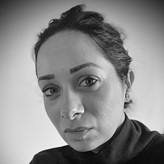
Rebecca is an experienced consultant, with almost twenty years working on gendered drivers of extremism in conflict and fragile states as a manager, evaluator and technical advisor.  After starting her career working on humanitarian protection, gender-based violence and human trafficking, Rebecca specialized in prevention of violent extremism, auditing conflict and gender-sensitive interventions, providing strategic policy advice and  building private and public sector capability in the UK, Canada, EU, Africa and the Middle East. Rebecca has supported large programmes integrate the nexus of violent extremism and strategic communications, human rights, peace-building, security and macro-fiscal reform and has evaluated large communication and social media programmes focused on prevention violent extremism. Rebecca is a Senior Advisor on Gender and Conflict for the UK government and runs her own small consulting company.

EL-HAGE, Habib

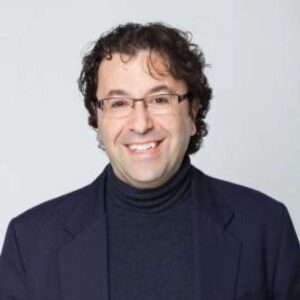
Director of the Research Institute for the Professional Integration of Immigrants (IRIPI), Habib El-Hage is a practitioner and researcher in the field of intercultural relations. Holder of a doctorate in sociology from University of Québec in Montréal (UQÀM), M. El-Hage focuses on prevention, intervention and mediation practices in private and public institutions.  He is Associate Researcher at the Centre de recherche sur l’immigration, l’ethnicité et la citoyenneté (CRIEC) and a member of the Research and Action on Social Polarizations (RAPS) team at the SHERPA Research Institute of the Montréal West Island Integrated University Health and Social Services Centre (MWI IUHSSC). Lecturer in the master’s program in intercultural mediation at the University of Sherbrooke, Mr. El-Hage has been working in the field of education for 19 years. He has taken part in several research projects on radicalization and recently published the results of a study on the multiple barriers experienced by racialized LGBTQ people in Montréal, as well as a book on intercultural intervention in a college environment. Mr. El-Hage is an associate member of the UNESCO-PREV Chair.

TOUCHET, Frédéric

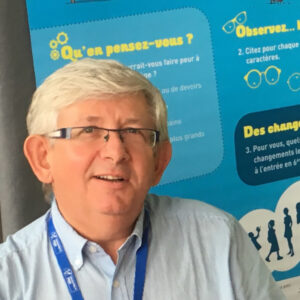
Frédéric Touchet, engineer, is the founder and director of Le Moutard, located in Lyon. He creates and produces didactic and interactive supports for young people and educational actors. His concept “Expo-quiz®” allows reflection and debate on social issues in schools, leisure activities and supervised education. His multidisciplinary expertise has allowed him to get involved in the field of primary prevention of radicalization through the creation of numerous titles such as “Awakening the critical spirit”, “Secularism”, “Equality between girls and boys”, or “Living in the city, let’s talk about it! ». His productions are developed in close partnership with institutions of reference in the fields of education and justice, as well as with the public concerned. They are recognized at the French and European levels and have won several awards.

THÉROUX-BÉNONI, Lori-Anne

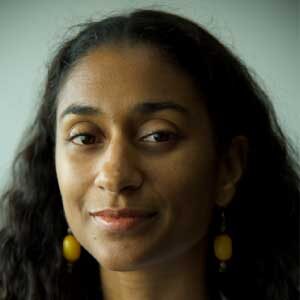
Lori-Anne Théroux-Bénoni is Director of the Regional Office for West Africa, the Sahel and the Lake Chad Basin at the Institute for Security Studies (ISS). She leads a team of researchers based in Dakar, Bamako, Abidjan, Abuja and N’Djamena. The unit works on key policy issues in the region such as violent extremism and terrorism, political instability, local conflicts, peace operations and political processes. Prior to joining ISS in 2012, she worked as a researcher for the Peace Operations Network (ROP) at the University de Montréal, in Canada, as well as for Radio-Canada and the Carter Center in Côte d’Ivoire. Ms. Théroux-Bénoni holds a doctorate in anthropology from the University of Toronto. She conducts research from an anthropological perspective through the studying of conflicts, insecurity and violence to inform current policy discussions and processes at national, regional and global levels. Mrs. Théroux-Bénoni is an associate member of the UNESCO-PREV Chair.

SÈZE, Romain

Holder of a doctorate in sociology from the École des hautes études en sciences sociales since 2012, Romain Sèze is a researcher at the Institut national des hautes études de la sécurité et de la justice (INHESJ). Attached to the Sociétés, Religions et Laïcités group, a research laboratory coordinated by the Centre national de la recherche scientifique (CNRS) and the École pratique des hautes études (EPHE-PSL), Mr. Sèze specializes in religion through the lens of security and justice issues. His research focuses on the political and religious sociology of the Muslim phenomenon in Europe, more specifically on militant violence perpetrated in the name of Islam and on the policies dedicated to it. He is also interested in the political and religious sociology of the Muslim phenomenon in Europe, more specifically in militant violence perpetrated in the name of Islam and on the policies dedicated to it. Mr. Sèze is a professor at Sciences Po Saint-Germain-en-Laye. Mr. Sèze is an associate member of the UNESCO-PREV Chair.

SAVAGE, Sara

Cofounder of the IC Thinking method, Sara Savage is a social psychologist and a senior research associate at the Department of Psychology of the University of Cambridge. Her doctoral work at the University of Cambridge laid the foundations for understanding the way in which cognitive and social dynamics shape how people think about the social world in fundamentalism, social polarisation and extremism. With her colleagues, she developed an array of interventions to address these phenomenons, operationalizing the construct of ‘Integrative Complexity’ (IC) to measure violence prevention-related cognitive change. Ms. Savage’s work spans universal prevention through critical thinking programs in schools, programs for identified ‘at risk’ youth, and programs for former and current detainees involved in violent extremism. She is the author of thirty-four publications in this field. Mrs. Savage is an associate member of the UNESCO-PREV Chair.

SAMBE, Bakary

Bakary Sambe is director of the Timbuktu Institute, the African Center for Peace Studies based in Dakar and Niamey; coordinator of the Observatory of Radicalisms and Religious Conflicts in Africa; and a teacher-researcher at the Centre d’étude des religions (CER) at the Université Gaston Berger in Saint-Louis, Senegal. Dr. Sambe is a specialist in both transnational networks and the prevention of violent extremism in the Sahel, in both theory and practice.  With a PhD in Political Science and an MA in Arab and Islamic Studies, Dr. Sambe is the author of several publications, including Morocco in South Sahara: Strategic Influence in Times of Geopolitical Changes (2013), Europe, the Mediterranean and the Arab World at the Turn of the Century (2012) and The Mali Crisis, Origins and Impact in Sahel (2012). Dr. Sambe is an associate member of the UNESCO-PREV Chair.

ROUSSEAU, Cécile

Full Professor at the Faculty of Medicine of McGill University, Cécile Rousseau works for the Division of Social and Transcultural Psychiatry, a Department of Psychiatry unit. She is the scientific director of the Research and Action on Social Polarizations (RAPS) at the SHERPA Research Institute of the Montréal West Island Integrated University Health and Social Services Centre (MWI IUHSSC). Ms. Rousseau leads a research team on the intervention and prevention of radicalization leading to violence in the areas of health, social services and education. She also conducts research on school-based prevention programs for immigrant and refugee youth, on the impact of migration policies on mental health, on creative expression in school programs and on secondary traumas related to organized war and violence. Mrs. Rousseau is an associate member of the UNESCO-PREV Chair.

MUSLIU, Afrodita

Executive Director and founder of NEXUS Civil Concept, North Macedonia, Afrodita Musliu holds a master’s degree in International Business Administration from Swedish University of Agricultural Sciences – Department of Economics. She has 19 years of experience within civil society organizations in North Macedonia. She is a researcher and certified trainer for OSCE’s UNITED CVE Program – Youth Leaders against Intolerance and Violent Extremism (LIVE), trainer for high school teachers and school staff. Her research focuses on religious radicalism, ethno-nationalism and political extremism. Questions related to the role of women in prevention of radicalisation and countering violent extremism (P/CVE) and breaking new grounds important for prevention and building youth resilience within communities most susceptible to radicalisation that leads to violent extremism are essentials to her work. Furthermore, she is involved in a number of projects with international organizations as an expert-practitioner on development of handbooks and training curricula for preventing radicalisation and violent extremism.

RENARD, Thomas

Thomas Renard is a Senior Research Fellow at the Egmont Institute, a think tank, and Adjunct Professor at the Vesalius College, in Brussels. He has 15 years of research experience on counter-terrorism policies in Europe. His recent research focussed on responses to returning foreign fighters and their families (including children) in Europe and in the Maghreb, on radicalisation in prison and terrorist recidivism. He has done extensive research on terrorism and radicalisation in Belgium, and the evolution of counter-terrorism/radicalisation policies since 2001. Professor Renard has been invited to present his research in numerous institutions, such as the UNSC, UN CTED, GCTF, ASEM, European Commission and European Parliament. He is also regularly invited to teach or provide trainings for CVE practitioners, and is involved in several confidential policy discussions. He has also organised various trainings and study days, bringing together key academics and CVE practitioners in Belgium. Mr. Renard is an associate member of the UNESCO-PREV Chair.