POTVIN, Maryse

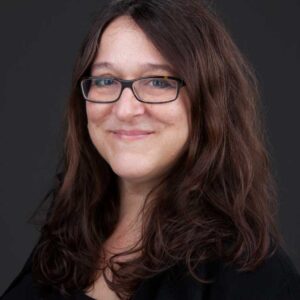
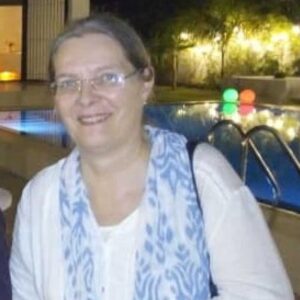
Full Professor at the University of Québec in Montréal (UQÀM), Maryse Potvin is a political scientist and sociologist who specializes in the field of education. Director of the Observatoire sur la formation à la diversité et l’équité (OFDE), Ms. Potvin is a member of the Research and Action on Social Polarizations (RAPS) at the SHERPA Research Institute of the Montréal West Island Integrated University Health and Social Services Centre (MWI IUHSSC) and the Accessing Law and Justice (ADAJ) consortium. For the last twenty-five years, her research has focused on racism and ethnic relationships from different angles : sense of belonging and identity-related issues between majorities and minorities, social discourses, public policy and populist groups, “discursive” radicalization, identity experience and construction of youth from racialized minorities, and anti-racist, inclusive, intercultural, civic and rights-based education. Ms. Potvin’s research led her to publish more than a hundred books and articles. She worked as an expert advisor for the European Commission, the Bouchard-Taylor Commission, UNICEF Canada, the Montréal Intercultural Council (CIM), the Intercultural Relations Council (CRI), the Ministère de l’Immigration et des Communautés culturelles (MICC) and the Ministère de l’Éducation et de l’Enseignement supérieur (MEES). Mrs. Potvin is an associate member of the UNESCO-PREV Chair.

PAUSCH, Markus

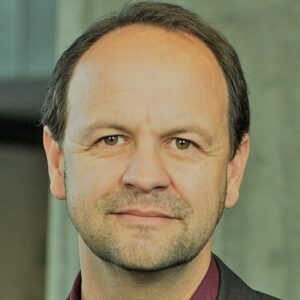
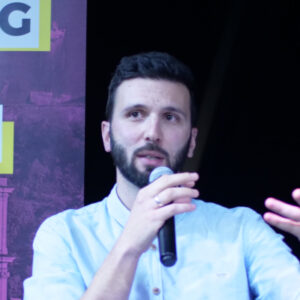
Professor at the Department of Social Innovation of the Salzburg University of Applied Sciences, Markus Pausch is a political scientist with a focus on democracy and participation. He is involved in various research projects such as the EU-H2020 Project Partnership Against Violent Radicalisation in the Cities (PRACTICIES) on inclusive democracy, democratic innovation and civic education as methods of early prevention against anti-democratic extremism. Grounded in the belief that social and political exclusion increases the danger of anti-democratic movements, his theoretical and empirical research focuses on concepts of democratic inclusion and the connection between constructive and non-violent revolt and democracy. Among other topics, Mr. Pausch did research, published papers and delivered lectures on European integration, citizenship education and democracy in the workplace. Mr. Pausch is an associate member of the UNESCO-PREV Chair.

NORELL, Magnus

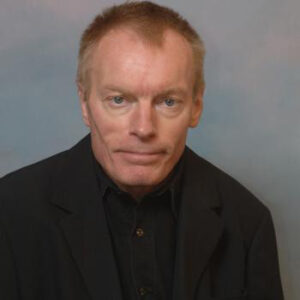
Magnus Norell is an Adjunct Scholar at the Washington Institute for Near East Policy in Washington, Senior Fellow at the European Foundation for Democracy in Brussels and Research Associate at the Wilfried Martens Center for European Studies in Brussels. His research focus mainly on International Terrorism (particularly of the religiously motivated kind), Political Violence and the tension between religion and politics. Norell has written and researched extensively on issues concerning issues of national security and democracy-changes in the Middle East/North Africa region (MENA) and Pakistan and Afghanistan. Norell has a background in Military and Civil Intelligence where he worked on Counter-Terrorism and International Terrorism. Dr Norell has a PhD in Political Science and Peace & Conflict Research from the University of Stockholm and has worked and/or studied at the Universities of Stockholm, Uppsala, Genève, Jerusalem (The Hebrew University) and Haifa.

NAGEM, Rasha

Doctoral researcher at the EFTS laboratory of the University of Toulouse-Jean Jaurès, Rasha Nagem is a trainer and euro-mediterranean expert the field of prevention of violent radicalization and extremism. Mrs. Nagem is Programme Manager for the PRACTICIES H2020, Integra, Erasmus+, JPCOOPS and SAT LAW European projects. Her research focuses on radicalization processes among young people and their related prevention policies, as well as the measures of impact of pedagogical prevention tools. She is involved in a number of European projects and organizations on various topics: violent extremism and radicalization, youth delinquency, migration and integration. Mrs. Nagem is an associate member of the UNESCO-PREV Chair.

MOTTET, Carol

Carol Mottet has worked at the Swiss Federal Department of Foreign Affairs (FDFA) since 2004. Currently Senior Advisor to the Human Security Division, the FDFA’s expertise centre on peace and security matters, she leads a program to prevent violent extremism, participating in the political work of the Ministry while providing expertise in carrying out various activities with program partners. From 2011 to 2014, as Special Representative, she provided support to ECOWAS’s Economic Community of West African States mediation efforts for the resolution of the conflict in Mali. She also acted as Special Advisor to the Special Representative of the United Nations Secretary General for Mali as part of the United Nations Multidimensional Integrated Stabilization Mission in Mali (MINUSMA) for the mediation process from 2013 to 2014. Specialized in public international law, humanitarian law and human rights, Ms. Mottet holds a graduate degree in international relations and a bachelor’s degree in political science from the Graduate Institute of International Studies. Mrs. Mottet is an associate member of the UNESCO-PREV Chair.

MOCEVIC, Nedzad

Nedžad Moćević is junior researcher and lecturer at the University of Applied Sciences in Salzburg. He is researching in the field of prevention of violence and lecturing on the topics of radicalization and also on social change. He is also working for the “Extremism Information Center” where he is conducting workshops for social workers, teachers and other professionals who are interested in the prevention of violent radicalization. Additionally to that he is self-employed as a consultant and trainer in the field of cultural diversity and intercultural competence where he is advising companies, organizations and institutions who are interested in fostering intercultural understanding amongst their workforce or members.

MAKAREM, Amer

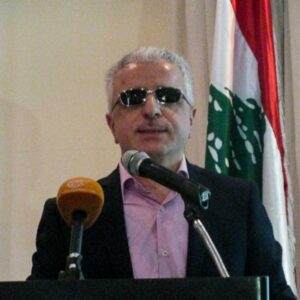
A graduate in philosophy and teaching from the American University of Beirut (AUB), Amer Y. Makarem is a blind Lebanese citizen. Director of the Youth Association of the Blind (YAB) based in Lebanon since 1989, he develops projects for the inclusion of the blind in public and private schools. Mr. Makarem is a pioneer advocate and practitioner in promoting inclusive education in Lebanon and the region. A professor of special education at the University of Saint Joseph (USJ), he is also the coordinator of the Network for Inclusion in Lebanon, a board member of the Asian Blind Union, and a member of the executive committee of the World Blind Union. His latest publication, released in 2019, is a guide on training teachers and special educators to include and support students with visual impairments in inclusive schools. Dr. Makarem is an associate member of the UNESCO-PREV Chair.

LOWE, David

David is a senior research fellow at Leeds Law School, Leeds Beckett University. His research areas include terrorism and security, extremism, policing and human rights, with his interest in these areas emanating from his previous career as a police office in the UK. His work has been widely published work covering a doctrinal legal as well as a socio-legal analysis in a comparative study of legislation, case reports and policies in various states’ jurisdictions. He is a member of the UK’s Counter Terrorism Advisory Network and an external member of UK Parliament’s All-Party Parliamentary Committee on a Fit and Healthy Childhood where David providing advice on how extremism impacts on children and young people. David is assisting the Northern Ireland Assembly on the introduction of hate crime legislation and a strategy to prevent persons from being drawn towards extremism and sectarian groups.

LINDEKILDE, Lasse

Lasse Lindekilde is professor at the Department of Political Science, Aarhus University. He holds a PhD from the European University Institute. His research is focused on political mobilization, violent radicalisation, online political hostility and the implementation and effects of counter-terrorism policies and communication, and interventions to prevent online political aggression. He has published more than 40 articles and book chapters in this domain. His work is interdisciplinary linking insights from political science, political sociology, criminology, social psychology and communication studies. Methodologically he has published work building on both field work, survey research and experimental techniques. His research is funded by, amongst others, the European Commission, the Minerva Research Initiative and the Danish Research Council. He has close collaborations with authorities at a local, national and international level.

LEMAN-LANGLOIS, Stéphane

Stéphane Leman-Langlois is Full Professor at the École de travail social et de criminologie of Université Laval. Member of the Intersectoral Team on the Prevention of Social Polarization and Radicalization Leading to Violence of the CIUSSS de la Capitale-Nationale, Mr. Leman-Langlois is Chairholder of the Chaire de recherche du Canada en surveillance et construction sociale du risque. He is Director of the Centre sur la sécurité internationale (CSI) and Co-Director of the Observatory on Radicalization and Violent Extremism (OSR). His research has focused on domestic and international terrorism and right-wing extremism. Mr. Leman-Langois has a doctorate in criminology from the University of Toronto since 2000 and a postdoctoral degree in criminology from the University of Montréal since 2003. Mr. Leman-Langlois is an associate member of the UNESCO-PREV Chair.